ServicesSiding Installation
Siding Installation in Mills River
New siding is only as good as the wall behind it. We take the old layers off, show you what we find, fix rotted sheathing and failed flashing, then install fiber cement, vinyl or engineered wood so the house looks right and stays dry.
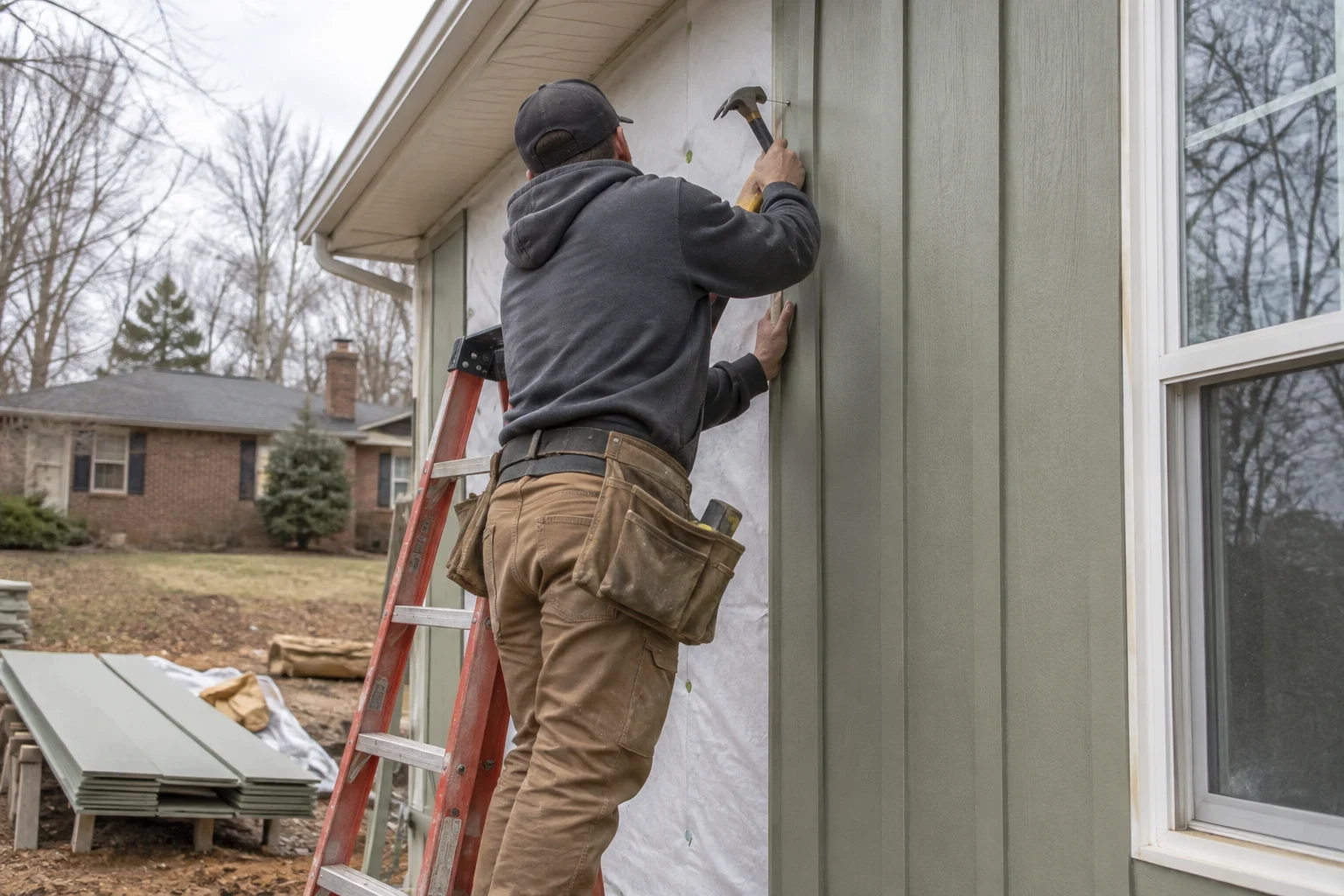
What Siding Installation Covers and When It Makes Sense
Siding installation means replacing the outer skin of your house: the boards or panels, the trim around windows and doors, and the weather barrier and flashing that sit underneath. Done well, it sheds rain, handles summer humidity and winter freeze-thaw, and changes how the whole house looks from the street.
Older houses usually hold a few surprises. We often find two or three layers of siding stacked over each other, patches from past repairs that don't match, and window flashing that was never there to begin with. We plan for that from the start, so you hear about it early and the price doesn't drift without explanation.
If only one wall is failing, we'll say so. Sometimes a section repair is the honest answer, and sometimes a full replacement saves you money over the next ten years. We walk you through both before anything comes off the house.
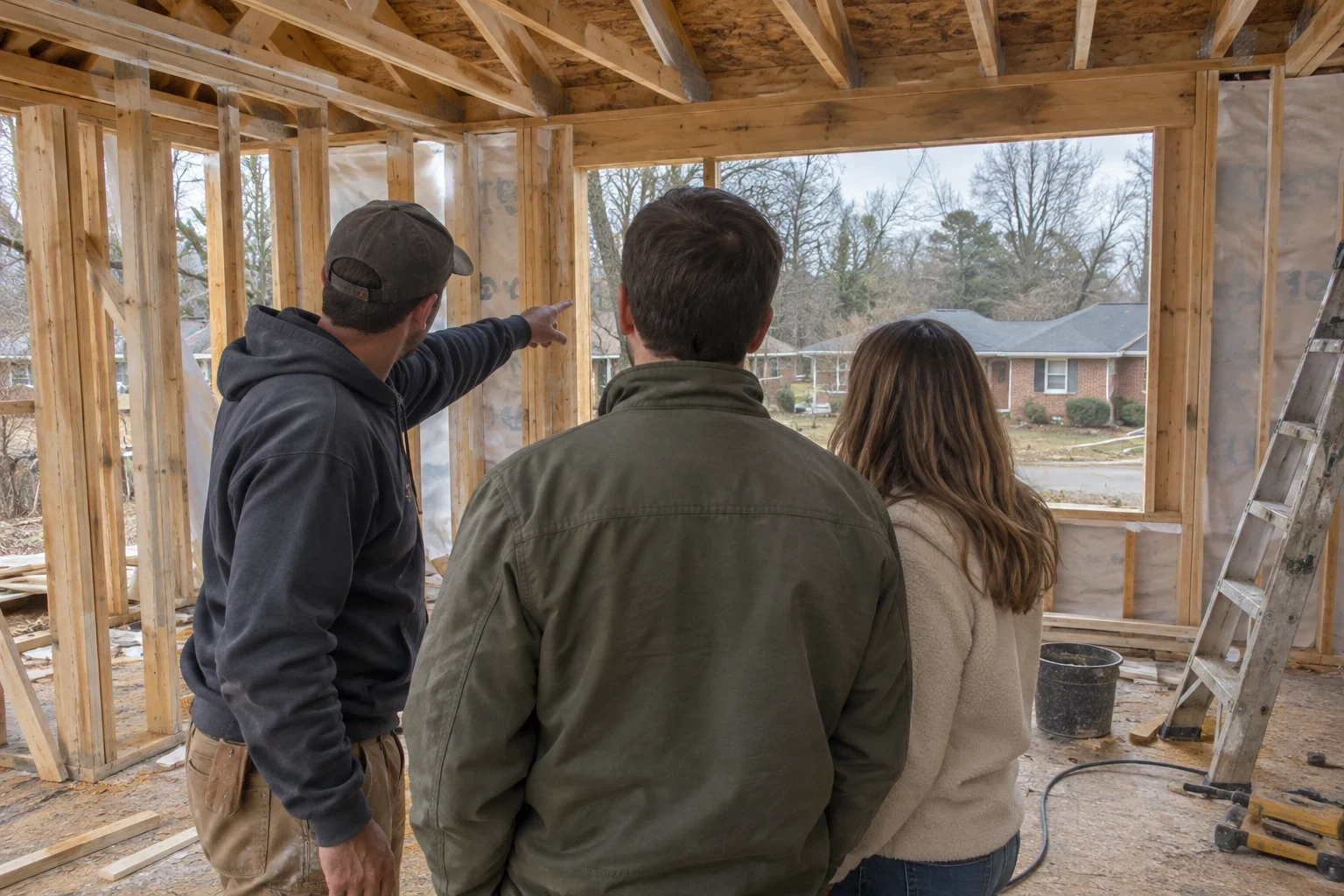
What's Included in Our Siding Work
- 01
Careful tear-off
We remove old siding down to the sheathing, one section at a time, so the house is never left open to the weather longer than it has to be.
- 02
Wall inspection with photos
Once the wall is open, we photograph soft sheathing, insect damage and gaps around windows. You see what we see before we price any extra repair.
- 03
Sheathing and framing repair
Rotted plywood or board sheathing gets cut out and replaced. If moisture has reached the framing, we repair that too, so the new siding fastens into solid wood.
- 04
Weather barrier and flashing
A new house wrap goes on, lapped the right direction, with flashing tape and metal flashing at windows, doors, roof lines and deck ledgers. This is where most leaks start, so we take our time here.
- 05
Siding and trim installation
We install the material you choose, with the gaps, fastener spacing and clearances its manufacturer calls for, and finish the corners, soffit edges and window trim cleanly.
- 06
Cleanup and haul-away
Old siding, nails and scrap leave the property with us. We run a magnet sweep over the yard and driveway before the last day ends.
Questions about Siding Installation?
Call(828) 439-0842Signs Your Siding Is Due for Replacement
Soft spots or swelling
Press on a board near the bottom of a wall or under a window. If it gives, water has been getting behind it for a while.
Paint that won't hold
Paint that peels within a year or two of a fresh coat usually means moisture is coming through from behind, not a bad paint job.
Stains or mildew inside
Water marks on interior walls, musty closets on an outside wall or peeling paper near windows can trace back to siding and flashing that have stopped working.
Cracked, warped or missing pieces
Vinyl that has buckled in the sun, split wood clapboards or loose boards let rain straight into the wall.
A patchwork of old repairs
Mismatched boards, caulk-filled seams and different profiles on each side of the house often hide old damage that was covered instead of fixed.
How a Siding Project Runs
- 1
Consultation and walk-around
We start with a phone conversation about your house and goals, then look at every wall, check for soft spots and talk through material options with you.
- 2
Written estimate
You get a line-item estimate that separates siding, trim, wrap and flashing, plus a clear unit price for any sheathing repair we can't see until the old siding is off.
- 3
Permit and scheduling
Where a permit is required, we pull it. We order materials and pick a start date that avoids long stretches of wet weather where we can.
- 4
Tear-off, repair and install
We work wall by wall: remove, inspect, repair, wrap, flash and side. You'll get a quick update with photos if we find anything that changes the plan.
- 5
Final walk-through
We walk the house with you, check trim and caulk joints, and make sure the yard is clean before we call the job finished.
What Affects the Cost of New Siding
No two houses price the same, and the biggest unknown is what sits behind the old siding. We give you a firm price for the work we can see and a stated rate for repairs we can't, so nothing is left to guesswork once the walls are open.
- Wall area and height
- The bigger the walls, the more siding, wrap and hours go into the job. Second-story walls and houses on a slope often call for scaffolding or a lift, and setting that up takes extra time.
- Material choice
- Vinyl, engineered wood and fiber cement each carry a different material price, and they take different amounts of time to cut, fasten and finish.
- Layers to remove
- A single layer of siding comes off fast. Two or three stacked layers, or old shingles that need careful handling, add labor and disposal.
- Sheathing and framing condition
- Older houses often have rot under windows and along the lowest boards. The amount of wood we end up replacing is usually what moves the final number most.
- Trim and detail work
- Plenty of windows, bump-outs, gables and porch connections mean more flashing and more custom cuts.
Siding Installation Questions
Can you put new siding over my old siding?
We can, but we rarely recommend it on an older house. Covering old siding hides any rot or leaks behind it, and the extra thickness throws off window and door trim. Taking it off lets us fix the wall and install the new siding flat and properly flashed.
Which siding holds up best in our weather?
Fiber cement stands up well to humidity, sun and insects and doesn't warp, though it's heavier and slower to install. Vinyl costs less and needs little upkeep. Engineered wood gives a real wood look with better moisture resistance than plain boards. We'll talk through how each fits your house and budget.
What happens if you find rot once the old siding is off?
We stop, take photos and show you before we repair anything beyond the estimate. The repair is priced at the rate written in your estimate, so you know the cost before work continues.
What if my house has old shingles that might contain asbestos?
Some older houses have cement shingles that may contain asbestos. If we see them, we pause and recommend testing before anything is removed. You'll know the result and the safe way forward before work goes ahead.
Do I need to be home during the work?
No, as long as we can reach the outside walls and an outdoor outlet. It does get noisy, and we'll ask you to move cars and patio furniture away from the walls. We keep you posted by phone each day.
Can you match new siding to the rest of my house?
For partial repairs we look for a matching profile and color, and we'll tell you honestly how close the match will be. Older or discontinued siding can be hard to match, and sometimes replacing one full side looks better than a patch.
Ready to See What's Behind Your Siding?
Tell us about your house and what you're noticing on the walls. We'll set up a project consultation, look at every side and give you a straight answer on repair or replacement. If your plans grow, we also handle home remodeling and foundation work.