ServicesFoundation Work
Foundation Work in Mills River
We pour footings and build foundations for new homes and additions. We also repair the ones under older houses: tired block piers, cracked walls and patch jobs from decades ago. You get a clear look at what is going on down there and a plan that fixes the cause.
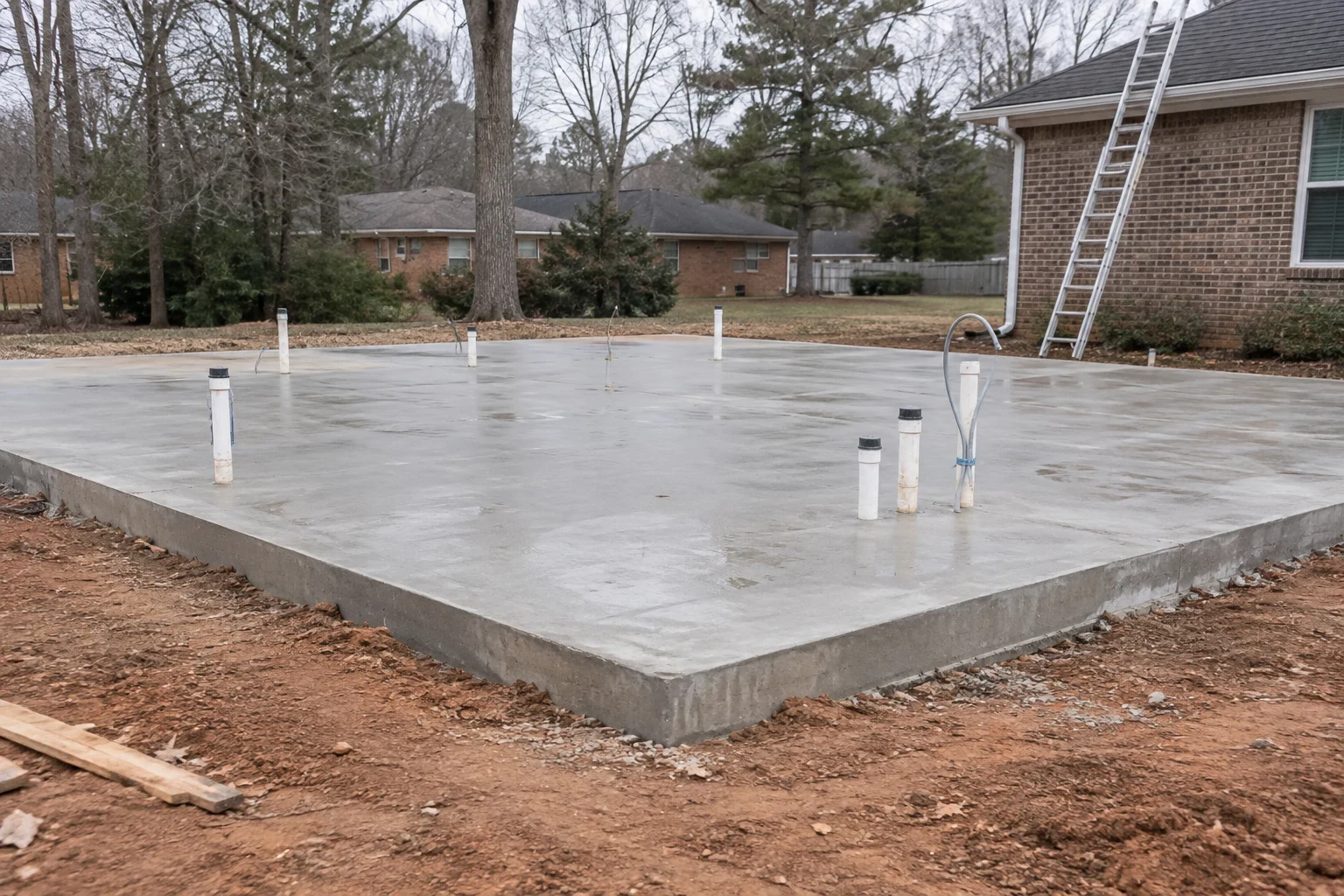
What a Solid Foundation Takes
Everything above a house depends on what sits under it. On a new build, that means footings sized for the soil and the load, a level wall or slab, and good drainage from day one. On an existing home, the job usually starts with figuring out what was built, what was changed later and what has moved since.
Foundations under many houses around here are block or brick on a crawlspace, sometimes with stone sections or piers added during a past remodel. We often find shims stacked on shims, a steel post set on a loose brick, or a crack patched over without fixing the water that caused it. We open things up carefully, take photos and show you what we found before anyone talks about cost.
Some problems need a structural engineer to weigh in. When that is the case, we say so and work from their plan instead of guessing.
What Our Foundation Work Covers
Footings and walls for new builds
We lay out, dig and pour footings for custom homes and additions, then build block walls or form poured walls to match the floor plan. The footing inspection happens before concrete goes in.
Pier and post replacement
Crumbling brick piers, undersized blocks and rotted wood posts get replaced with properly footed supports. We set the new ones before pulling the old so the floor above stays carried.
Crack and wall repair
We repair cracked block and poured walls and rebuild sections that have bowed or shifted. The repair comes with a fix for what pushed it, usually water or soil pressure.
Crawlspace moisture fixes
Damp crawlspaces rot sills and joists over time. We handle vapor barriers, foundation drains and the outside grading that keeps water moving away from the walls.
Sill and joist tie-in
Where the foundation meets the framing, old damage often hides. We replace rotted sill plates and sister weak joists so the repaired foundation and the house above work together.
Signs Your Foundation Needs Attention
Doors and windows that stick
A door that suddenly rubs or a window that will not close square often means the floor under it has dropped. It is worth checking before it gets worse.
Floors that slope or bounce
A marble that rolls across the room or a soft spot near a wall can point to a sinking pier or a rotted sill. In houses with some age on them, it is often both.
Cracks that are growing
Hairline cracks in block are common. Stair-step cracks, wide gaps or a crack you have watched lengthen are a different story and deserve a closer look.
Water or musty smell in the crawlspace
Standing water, damp soil or a mildew smell coming up through the floor means moisture is getting where it should not. Our wet spring and summer storms make this a common one.
Odd fixes from past owners
Car jacks holding up a beam, stacks of wood shims or new posts sitting on bare dirt tell you someone was chasing a problem. We find out what they were chasing.
How a Foundation Job Goes
- 1
Consultation and walk-through
We start with a phone conversation about what you are seeing, then come look at the house or the lot. On existing homes we get into the crawlspace or basement and walk the outside to see where water goes.
- 2
Findings and written plan
You get photos of what we found and a written estimate with each part of the work listed. If an engineer's input is needed, we tell you up front and explain why.
- 3
Permits and prep
We pull the permit when the work calls for one and schedule inspections. Before digging, we protect landscaping where we can, mark utilities and plan how equipment gets in.
- 4
The work itself
For repairs, we shore the house first, then remove and replace the failing parts in sections. For new builds, footings are dug, inspected and poured before walls go up.
- 5
Cleanup and final look
We backfill, regrade so water drains away from the house and haul off debris. Then we walk you through the finished work so you know what changed.
What Moves the Cost
Foundation costs depend heavily on what is under the house, and on older homes that is not always clear until we look. We price from what we see and explain each line. If we find something unexpected once work starts, we stop and show you before going further.
- Access to the work
- A tall crawlspace with an easy door is quicker to work in than a tight one with eighteen inches of clearance. Steep lots and tight side yards can limit what equipment fits.
- Soil and water
- Our red clay holds water and moves as it wets and dries. Wet sites may need drains, gravel or deeper footings, and that adds labor and material.
- How much is damaged
- Replacing two piers is a different job from rebuilding a wall or replacing a full run of rotted sill. Hidden rot found during repair is the most common surprise in houses that have been patched before.
- Engineering and permits
- Structural repairs and new foundations often need permits and inspections, and some need an engineer's design. Those steps take time and carry their own fees.
Foundation Work Questions
Something not covered here? (828) 439-0842
Do I need an engineer before you start?
Not always. Replacing a few failed piers often does not, but a bowing wall, major settlement or a new foundation design usually does. We will tell you which applies after we look, and we work from the engineer's plan when there is one.
Can I stay in the house during repairs?
In most cases, yes. Crawlspace and pier work happens under and around the house, and we keep the floor supported the whole time. Expect some noise and equipment in the yard, and we will let you know ahead of time if water or power needs to be shut off.
My house is old and has been repaired before. Is that a problem?
It just means we look harder. Past repairs tell us where trouble showed up, and some of them were done well. We keep what is sound, replace what is not and show you photos of both.
Do you build foundations for additions?
Yes. Tying a new foundation to an existing one takes care, because the two need to settle and drain together. We often handle this as part of a home remodeling project or a larger custom home building job.
How long does foundation work take?
A small pier repair can take a few days. Wall rebuilds and new foundations take longer, and inspection schedules and weather play a part. We give you a realistic timeline in the written estimate.
Let's Look at What's Holding Up Your House
Tell us what you are noticing or what you plan to build. We will come out, take a careful look and give you a straight answer on what the foundation needs.