ServicesGrading
Grading in Mills River
We shape the ground so water leaves your foundation alone. That means setting a level pad for a new custom home, or reworking the soil around an older house where years of settling and past fixes now send rain the wrong way.
What grading does for your lot and your house
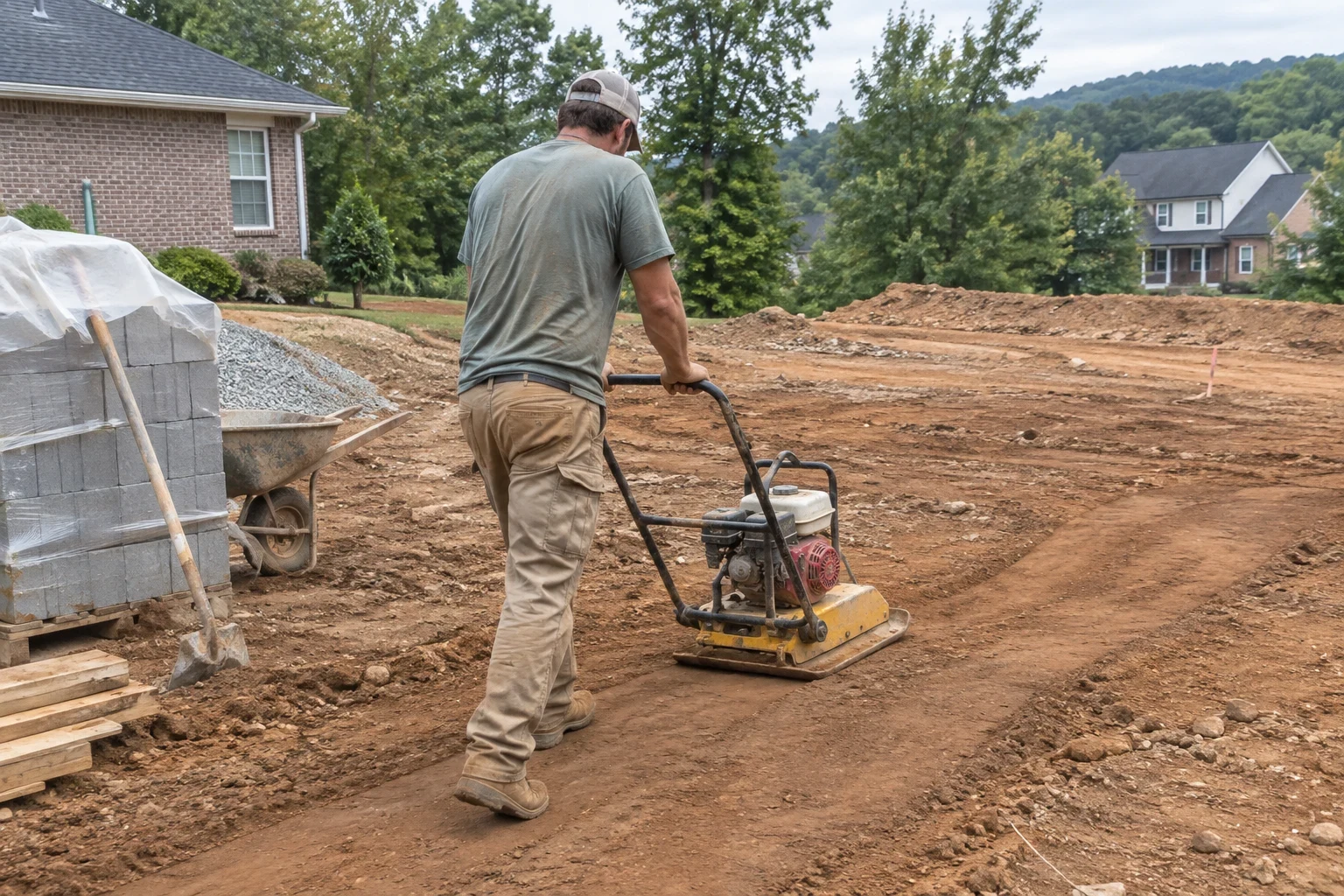
Grading is the work of cutting and filling soil so the ground has the right slope. On a new lot, it sets the building pad, driveway and yard at heights that match your floor plan. Around a house that is already standing, it rebuilds the fall away from the walls so rainwater drains off instead of soaking in beside the foundation.
Older homes are where we find the most trouble. A patio poured tight against the wall, flower beds raised a little higher every spring, a downspout someone buried and forgot, or soil that simply settled over decades can all leave the ground tilted toward the house. Before we move any dirt, we figure out what was done before and why. Piling fresh fill on top of an old mistake only hides it for a season.
The red clay common in this area holds water and swells when wet, so a correct slope does real work. Done right, grading keeps crawlspaces drier, protects the bottom of your siding and gives your foundation a much easier life.
What our grading work includes
- Slope and drainage assessment
- We measure the fall away from your foundation, check where every downspout discharges and look for the low spots where water sits after a storm. You get a clear picture of what is wrong before anything is dug.
- Rough grading for new builds
- After land clearing, we cut and fill to set the building pad and driveway at the elevations your plans call for. Fill goes down in thin layers and is compacted as we go, so the ground under your foundation stays put.
- Regrading around existing homes
- We pull back soil that has crept up against the siding, remove beds or old fill sloped the wrong way and rebuild a positive grade. Building codes generally call for about six inches of drop in the first ten feet from the wall, and that is the target we work toward wherever the lot allows.
- Correcting past drainage fixes
- We regularly uncover crushed pipe, gravel trenches packed solid with silt and old timbers rotting underground. We take out what no longer works and tell you plainly what we found.
- Swales and water paths
- Where the house sits below the slope, a shallow swale can carry runoff around the building to a safe spot downhill.
- Finish grading
- Once framing and siding are done on a new home, or once regrading is complete on an older one, we smooth and dress the surface so it is ready for seed, sod or planting.
Signs your property needs grading
Puddles against the foundation
If water stands next to the wall a day after rain, the ground is sloped toward the house. That water has nowhere to go but down along the foundation.
A damp crawlspace after storms
Musty smells, wet insulation or standing water under the house often start outside with poor grading, not with plumbing.
Soil touching the siding
When dirt or mulch covers the bottom of the siding, moisture wicks into the wood behind it. In older homes this is a common cause of rotted sills.
Patios and walks tilting inward
Concrete that has settled toward the house acts like a funnel for every rainfall.
Washed-out beds and small gullies
Mulch that ends up on the driveway or channels cut through the yard show where runoff is moving too fast.
A sloped lot you plan to build on
Hillside lots need a planned pad and drainage before the foundation goes in.
What drives the price of a grading job
No two lots slope or drain the same way, so we set a price only after walking yours. Your written estimate breaks the job into its parts, and we talk through anything that could change the number before the first scoop of dirt moves.
How much soil moves
The size of the area and the gap between today's grade and the finished grade decide how much cutting, hauling and new soil the work requires.
Access and slope
Narrow side yards, steep ground and fences or decks in the way can mean smaller machines and more work by hand.
What is underground
Rock, buried debris, old pipe or leftovers from an earlier repair all take time to dig out. We flag likely surprises during the site visit so they never show up later as charges you did not expect.
Drainage additions
Swales, longer downspout lines or fresh topsoil widen the scope when the property needs them.
Weather and timing
Wet clay will not shape or compact properly, so a run of rainy days can push the schedule back.
How a grading job runs
- 1
A phone consultation
You tell us about the lot or the house and what you have noticed. We ask about any past work you know of and set a time to come out.
- 2
Walking the property
We study the slopes, downspouts, foundation and any traces of older repairs. When it helps, we return after a rain to see where the water really goes.
- 3
Your estimate, item by item
We put in writing exactly what we plan to cut, add, remove and rebuild, with each piece priced on its own line. If a simpler fix such as a gutter extension would solve the problem without heavy grading, we tell you that first.
- 4
Grading days
Underground utilities are marked before any digging starts. We protect walkways and the plants you want to keep, compact each new layer of soil before the next goes down and check the slope with a level as we go.
- 5
Walk-through and cleanup
We walk the finished grade with you, point out where the water will run now and leave the site raked and tidy.
Grading questions we hear often
Can you regrade without tearing up my whole yard?
Usually, yes. Most regrading around an existing home stays within the first ten to fifteen feet of the foundation. We mark which plantings you want saved and work around them, and we tell you up front if a bed or shrub truly has to come out.
Will grading fix my wet crawlspace?
If the water is coming from runoff, correcting the slope often makes a big difference. Some crawlspaces also have groundwater or vapor issues that grading alone will not solve. We will tell you honestly which situation you have before you spend money.
How long does a grading job take?
Regrading around a typical house often takes a few days. Preparing a new building lot depends on its size and slope. Rain can add time, because working wet clay leaves a weaker, uneven result.
Do I need a permit for grading?
Small regrading jobs around a house usually do not. Larger land-disturbing work can require an erosion and sediment control plan under North Carolina rules. We check what your project needs during the consultation and handle that step with you.
What comes after grading on a new lot?
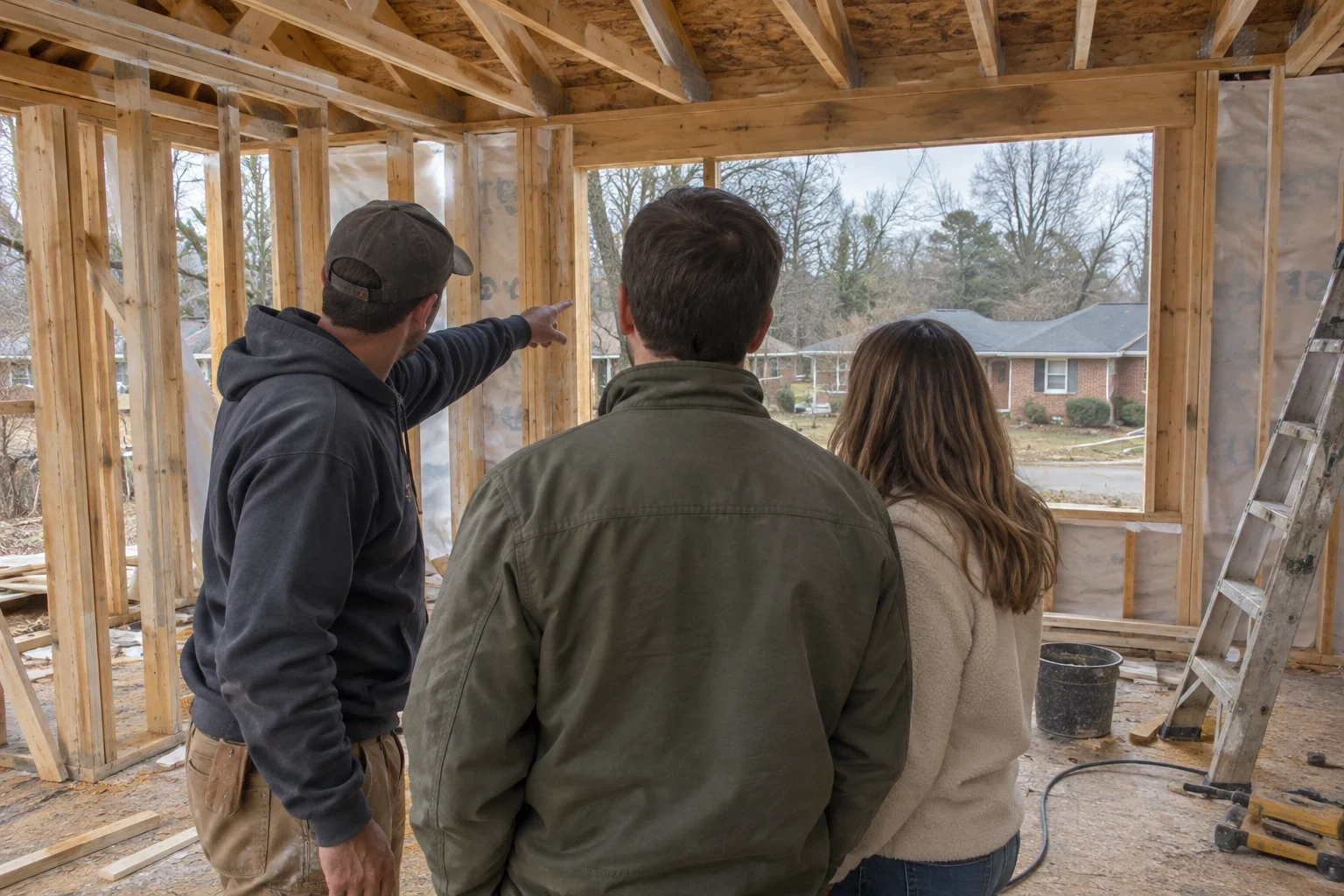
Once the pad is set and compacted, the next step is foundation work, followed by framing. Because we handle custom home building too, the grade, the foundation and the finished floor height are planned together from the start.
Ready to get the water moving the right way?
Tell us about your lot or your older house and what you have noticed after a heavy rain. We will talk through the likely fix and set up a visit to see it in person.