ServicesFlooring Installation
Flooring Installation in Mills River, NC
We install hardwood, engineered wood, luxury vinyl plank and tile. We start by checking what sits under your old floor. In older houses, that layer often hides soft spots, patched subfloor and uneven joists. Fixing those first keeps a new floor flat and quiet.
Why we check beneath the old floor first
When a floor squeaks, gaps or cracks, the flooring itself is rarely to blame. The trouble usually sits lower down: a subfloor that gives underfoot, a joist notched for a pipe years back, or several layers of vinyl glued one over another. Put fresh planks on top of that and the squeaks, gaps and cracked grout show up again within a season or two.
That's why we look before we price anything. Where we can, we lift a corner of the old floor, check the subfloor and head into the crawl space or basement. Afterward we walk you through what we saw, with photos, and sort out what needs repair from what can stay. If a small patch is all your floor needs, that's what we'll tell you.
New floors are often part of a larger plan. We handle flooring within home remodeling projects and in every custom home we build, and we're glad to take on a flooring job by itself too.
What our flooring installation covers
- 01
Removing old flooring
We tear out carpet, vinyl, laminate or tile, including older layers glued down underneath. Some older sheet flooring and adhesive may contain asbestos. If we find any, we stop and talk with you about testing before anyone disturbs it.
- 02
Subfloor and joist repair
We cut out soft or water-stained plywood and replace it. We screw down loose sections to stop squeaks, and we sister or shim sagging joists. That gives the new floor a flat, stiff base.
- 03
Leveling and moisture checks
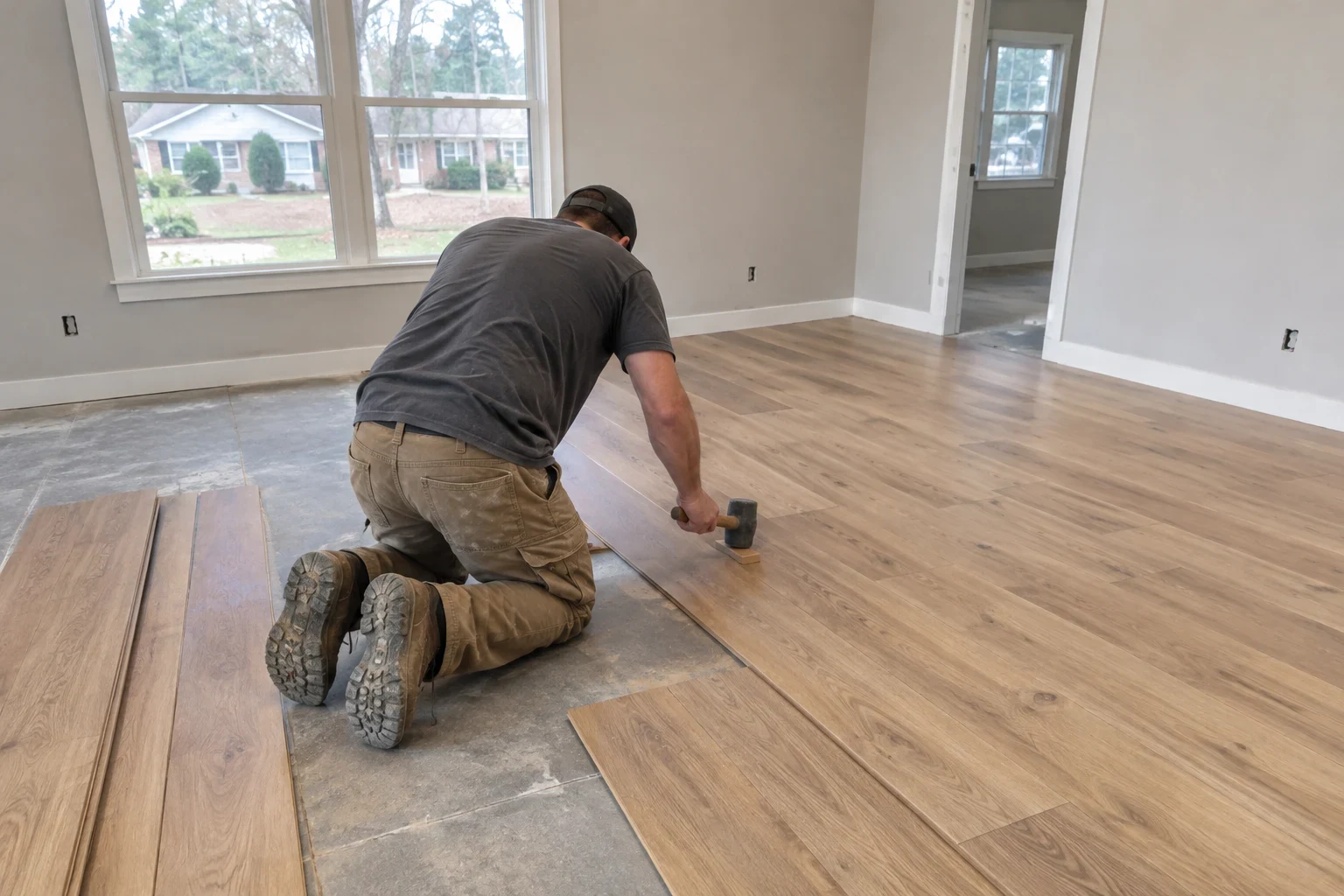
We check the floor for flat and test moisture in the subfloor and any concrete slab. Wood moves with humidity. Our humid mountain summers make it important to let hardwood and engineered planks acclimate in your home before they go down.
- 04
Installing the material you choose
We install solid hardwood, engineered wood, luxury vinyl plank, laminate and tile. Each is nailed, glued or floated, depending on the product and what's underneath.
- 05
Trim, transitions and doors
We reinstall or replace baseboard and shoe molding and set thresholds between rooms. We also trim door bottoms so they swing freely over the new floor height.
- 06
Cleanup
We haul the old flooring away. Then we vacuum and wipe down before we hand the room back.
Questions about Flooring Installation?
Call(828) 439-0842Signs it's time for new floors
Spongy or bouncy spots
A soft area near a tub, toilet or exterior door usually means water has reached the subfloor. It won't fix itself, and it tends to spread.
Squeaks that keep getting louder
Loose subfloor fasteners or dried-out joists rub as you walk across them. We fix the cause underneath, not just the surface.
Gaps, cupping or cracked tile
Hardwood boards that cup or pull apart, and tile that cracks in a straight line, point to moisture or movement below the floor.
Too many layers
Doors that drag and thresholds that stack up usually mean there are several floors on top of each other. Removing them takes weight off the framing and gives you a clean start.
Hardwood that can't be sanded again
Older hardwood can only be sanded so many times. When nail heads or tongues start to show, replacement is the honest answer.
How a flooring job runs
- 1
Consultation and inspection
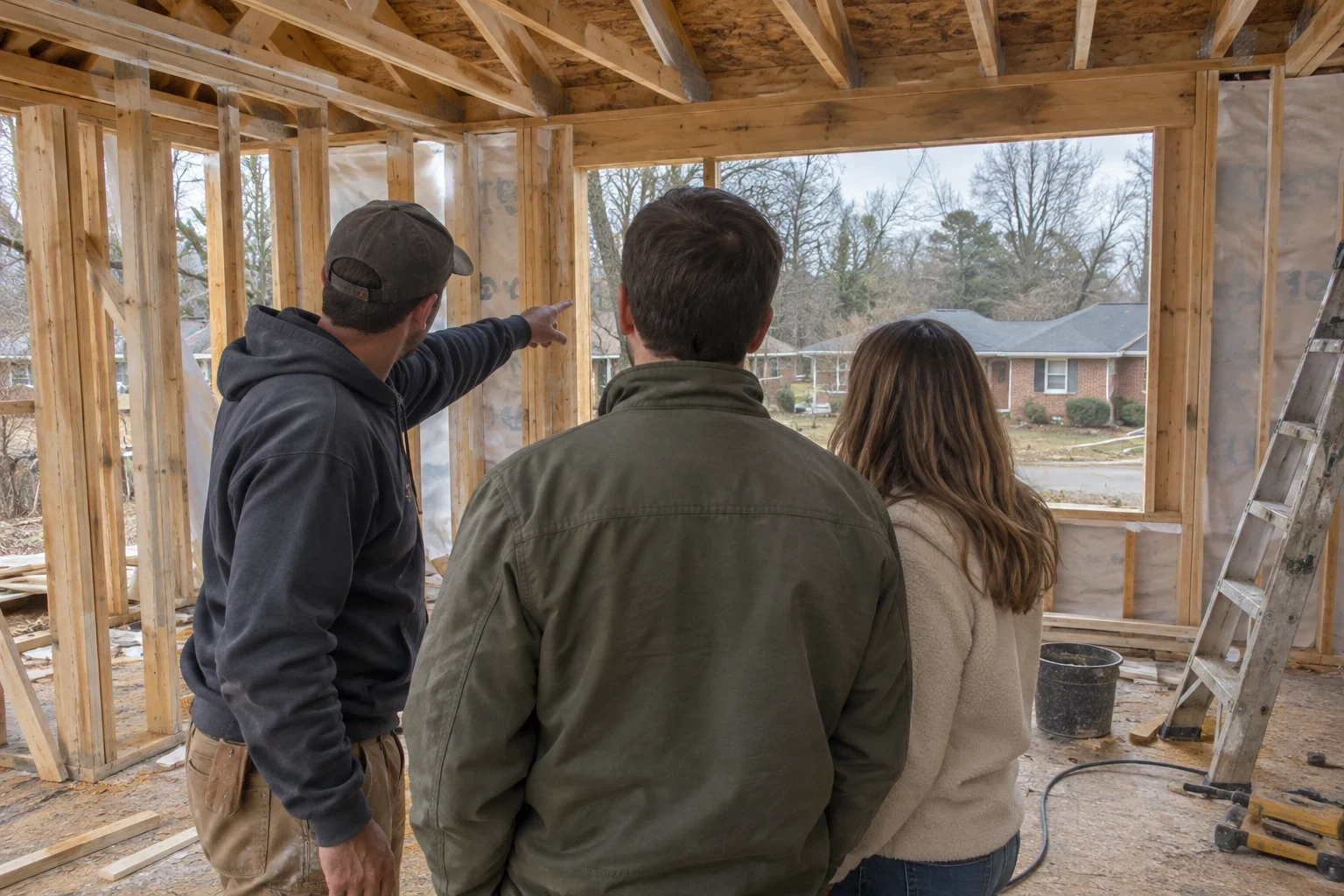
On the call, we talk through the rooms, the look you want and how you use the space. Then we visit to measure, check the crawl space or basement, and look under the old floor where we can.
- 2
Line-item estimate
Your written estimate lists tear-out, subfloor repair and installation separately, so you can see where the money goes. Sometimes we can't know the subfloor's condition until the old floor is up. When that's the case, we tell you up front and explain how we'll handle it.
- 3
Prep and protection
We cover walkways, protect cabinets and stair edges, and put up dust barriers where we can. Wood flooring is delivered early so it can acclimate in your home.
- 4
Tear-out, repair and install
Once the old flooring is up, we photograph anything we find underneath. If the scope needs to change, we talk with you before doing the work. We repair, level and install room by room, so you aren't shut out of the whole house at once.
- 5
Walkthrough and cleanup
We walk the finished floor with you and check every transition and door. Then we haul off the debris and leave care instructions for your material.
What affects the cost of flooring installation
We price every floor from our measurements and what we find during the inspection. The material you pick matters, but in older houses the biggest swings usually come from what's underneath. We list each part of the job on the estimate so nothing turns up as a surprise later.
- Square footage and layout
- Closets, stairs, angled walls and many small rooms mean more cuts and more labor than one open rectangle.
- Material and install method
- Nailed hardwood, glued engineered planks, floating vinyl and tile set in mortar each take different time and supplies.
- Tear-out of old layers
- A single layer of carpet comes up quickly. Glued vinyl over old linoleum over hardwood takes much longer. Suspect materials may also need testing first.
- Subfloor and joist condition
- Replacing rotted sections, leveling dips or stiffening joists adds work. It is often the part that makes the new floor last.
- Stairs and trim
- Stair treads, nosings, new baseboard and custom transitions add pieces and time.
Flooring questions we hear often
Can you put new flooring over my old floor?
Sometimes. A flat layer of sheet vinyl or tile that is still firmly stuck down can be a fine base for a floating floor. If the old floor is loose, uneven or already sitting on other layers, we recommend taking it up. We'll tell you which situation you're in after we look.
What flooring works best over a crawl space?
Engineered wood and luxury vinyl plank handle humidity swings better than solid hardwood. Solid hardwood can still work well when the crawl space is dry and has a good vapor barrier. We check those conditions before we recommend a product.
How long will my rooms be out of use?
That depends on the size of the job and what's under the old floor. A bedroom with a sound subfloor goes much faster than a kitchen with water damage. We plan the order of rooms with you so you can keep a working kitchen or bath whenever possible.
What happens if you find damage after the old floor comes up?
We stop and show you photos. We explain what we found and what it will take to fix it. Nothing outside the original estimate moves forward until you agree. That conversation always happens before anything gets covered up.
Can you match new flooring to the floors in my other rooms?
We can often get close, especially with hardwood, by matching the species, board width and stain. Very old floors have changed color over the years, so an exact match isn't always possible. In those cases, a clean threshold at a doorway usually looks more intentional than a near miss.
Let's talk about your new floors
Tell us about the rooms, what's underfoot now and what you have in mind. We'll set up a visit, look beneath the surface and give you a clear plan for the work.