ServicesLand Clearing
Mills River Land Clearing for New Builds
We clear trees, brush and stumps from your lot and dig out what earlier owners left behind, from old slabs to buried junk. You end up with an open, stable build site ready for grading and a foundation, with no hidden leftovers waiting to cause trouble later.
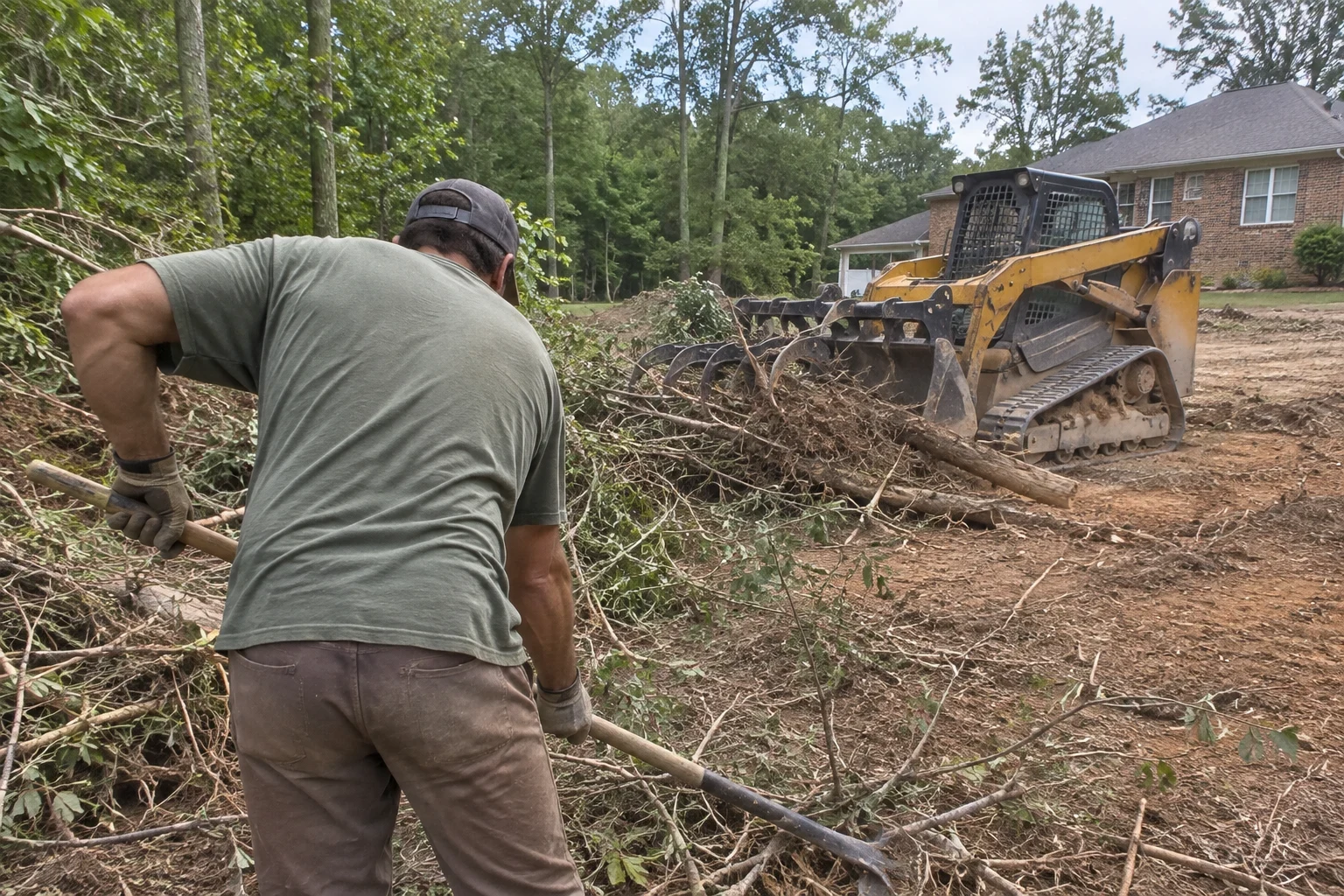
What land clearing does for your project
Land clearing takes a wooded or overgrown lot and turns it into a workable build site. That means removing the trees and undergrowth inside your building footprint, pulling the stumps and roots that would rot under a slab or crawlspace, and opening room for the driveway, utilities and equipment.
Many lots around here aren't raw land. They once held a farmhouse, a mobile home, a barn or a family dump spot. Old concrete pads, rusted fencing, buried trash and abandoned well or septic parts often turn up under the brush. We plan for that from the first visit, so those finds don't stall your build halfway through.
We also clear selectively. If there are healthy hardwoods you want to keep for shade or privacy, we mark them first and work around their root zones.
What's included when we clear your lot
Marking the footprint and keepers
We flag the house site, driveway path and any trees you want saved before a single machine starts. You walk it with us and approve it.
Tree and brush removal
We cut and remove trees, laurel and rhododendron thickets, vines and undergrowth inside the cleared area. Usable logs can be stacked for you if you'd like firewood.
Stump and root removal
Stumps under the house, porch or driveway come out fully, roots and all. Buried wood breaks down over time and leaves soft spots that can cause settling later.
Old debris and leftover structures
We remove old foundations, slabs, sheds, fencing and buried junk from past use of the property. If we find an old well or septic tank, we stop and talk with you about the right next step before going further.
Hauling or grinding the material
Depending on your lot and preferences, cleared material is hauled off or ground into mulch you can use for paths and erosion cover.
Basic erosion protection
Bare red clay washes fast in a mountain downpour. We put up silt fence and keep runoff in check until grading and the next phases begin.
Signs your lot needs clearing first
You can't see where the house would sit
If the build site is buried in trees and brush, nobody can judge slope, views or drainage. Clearing the footprint shows what you're really working with.
There's an old structure on the property
A collapsed barn, an old home site or a crumbling foundation needs to come out properly before new work goes in. Partial removal leaves rubble that causes trouble under fill.
Earlier owners cleared it halfway
Lots that were cut years ago often have stumps left in place and second-growth thickets around them. Those stumps have to come out before grading.
Equipment can't reach the site
If a concrete truck or excavator can't get in, you need a cleared access path and a turnaround before anything else can happen.
You suspect buried debris
Mounds, sunken spots or bits of metal and glass poking through the dirt usually mean something was buried there. It's far cheaper to find it now than during foundation work.
How a clearing job runs
- 1
Project consultation on your lot
We walk the property with you, look at slope, access, trees worth saving and signs of past use. We talk about what you plan to build and where.
- 2
Written scope and plan
You get a clear written scope of what will be cleared, how material will be handled and what happens if we hit something buried. We also go over any permits or erosion control steps your project needs.
- 3
Marking and setup
Trees to keep get protected, the footprint gets flagged, and silt fence goes in on the downhill side before we start cutting.
- 4
Clearing and stump removal
Crews cut, remove and grind or haul material, then pull stumps and roots. We keep you posted with photos of anything unexpected we uncover.
- 5
Final walk and handoff
We walk the cleared lot with you and leave it ready for grading. If we're also handling your grading and foundation work, the next crew picks up right where we left off.
What moves the price of clearing a lot
We don't quote clearing until we've walked your land, because no two lots carry the same mix of growth, slope and buried surprises. Thick hardwoods, steep ground and leftovers from past use cause the biggest differences. Your written scope breaks each piece out, so you can see where the money goes before a machine shows up.
- How much ground gets opened
- Opening only the house footprint and driveway is a much smaller job than clearing a whole acreage. We help you decide what truly needs to come down and what can stay.
- Tree size and density
- Big hardwoods and dense laurel thickets take more hours and heavier equipment than light brush or young pines.
- Slope and access
- Steep grades and narrow entrances slow the machines and can call for extra silt fence and runoff control.
- Leftovers from past use
- Old slabs, crumbling foundations, buried trash or abandoned septic parts add removal and disposal work. Older properties are where this shows up most, so we look for it on the first visit instead of finding it mid-job.
- Grinding on site or hauling off
- Grinding material in place usually cuts down on trucking. Hauling everything away means more trips and disposal fees.
Land clearing questions
Something not covered here? (828) 439-0842
Will my lot clearing need a permit?
That comes down to the size of the area you'll disturb and the lot's location. In North Carolina, bigger disturbed areas typically call for an erosion and sedimentation control plan, and lots near streams may have buffer rules to follow. We sort out what applies to your land during the consultation and help you get it handled before we start.
Can you save some of the trees?
Yes. We mark the trees you'd like to keep and keep heavy equipment off their root zones. If a tree sits too close to the house site or is too damaged to make it through construction, we'll tell you plainly.
What happens if you find an old septic tank or well?
We stop working in that spot and show you what turned up. Old tanks and wells need to be closed out properly rather than buried over, and we walk you through the options and costs before anything moves forward.
Do you burn the brush?
Usually not. We grind or haul the material instead, which avoids smoke, burn restrictions and the chance of a fire spreading on a dry day. If you want, the ground mulch can stay on your lot as erosion cover.
How long does clearing take?
A wooded house site can often be cleared in a few days, while bigger or steeper lots take longer. Weather plays a part too, since heavy equipment chews up wet clay. Once we've seen your property, we'll give you a realistic timeline.
Can you take the project from clearing to a finished home?
Yes. Land clearing often leads right into grading, foundation work and custom home building. Keeping it all with one team means fewer handoffs and fewer gaps in your schedule.
Let's look at your land together
Tell us about your lot and what you hope to build. We'll walk it with you, point out what needs to come out and give you a clear plan for getting the ground ready.